Sun in Shravana means the Sun was placed between 10 degrees and 23 degrees 20 minutes of Capricorn at your birth, in the twenty-second nakshatra, ruled by the Moon and presided over by Vishnu. Capricorn belongs to Saturn, which the classical scheme counts as the Sun’s enemy, while the Moon as star lord is friendly to it and softens the placement considerably. The mansion’s name means hearing and its symbol is the ear, which sets up the difficulty and the gift together, because the Sun’s natural mode is broadcasting. It is the centre that everything else orients toward, and it has been placed in the star of receiving. What follows is what it illuminates and what it scorches, the four padas, career, money, father and authority, health and practices.
Sun in Shravana sits entirely within Capricorn, so the Sun in Capricorn reading gives the sign-level terrain and this page sharpens it to the star. The star’s own reference for any planet placed here lives at the Shravana nakshatra guide.
On this page
Check your own chart · On Grahan yoga and Pitru dosha · The star through the Sun · The Sun in Shravana nature · What it illuminates, what it scorches · Male and female charts · The four padas (1, 2, 3, 4) · Career and standing · Money · Father and authority · Health · Practices · Questions
Check your own chart
Confirm the placement before reading. The checker returns the Sun’s exact nakshatra and pada from the Swiss Ephemeris along with every other graha, and flags a planet close enough to a boundary that birth-time error could move it, which matters here because the first quarter carries the Sun’s exaltation in the navamsa beneath an unfriendly sign.
Find this placement in your own chart
Birth details go to our own Swiss Ephemeris engine and nowhere else. Nothing is stored.
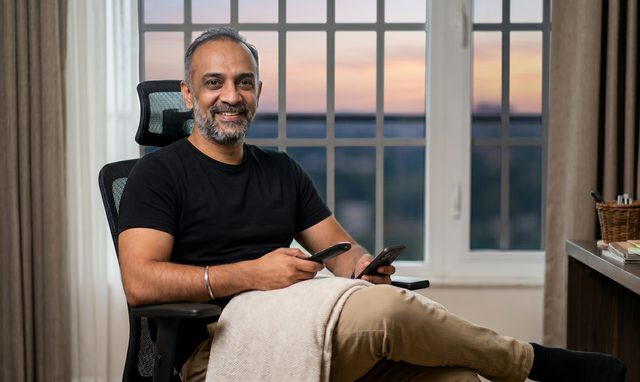
First I read your past to you. Then we talk about your future.
The call starts with your past. I read what the chart says has already happened, the hard years, when work moved, when marriage or a child came, and you tell me what fits, so within ten minutes you know whether I can read your chart. Only then do we come to your question and the timing. Message me any time with your birth details and your main question. I'm around all day until late, India time, and if I'm tied up I'll get back to you and we'll set a time that suits you. WhatsApp voice call in Hindi, English or Punjabi, in plain language and honestly, with no fear-mongering.
On Grahan yoga and Pitru dosha
Both come up constantly in Sun searches, so they are worth settling before the reading proper.
Grahan yoga, the eclipse combination, is a conjunction, the Sun with Rahu or with Ketu in the same sign and usually within close degrees, checked in the chart itself. A nakshatra lordship is a different thing entirely.
Pitru dosha is assessed from house placement and specific afflictions, most commonly involving the Sun, the 9th house and its lord, and the nodes. It is a chart-level judgement rather than anything a nakshatra decides.
This site does not predict harm to any relative from any placement, and no page here will tell you that a chart threatens your father.
The star through the Sun
Shravana means hearing, and the tradition builds a great deal on that word. Its highest category of knowledge is shruti, that which was heard, and the point of the term is that nobody composed it. The authority of what is transmitted rests on it having been received accurately and passed on unaltered rather than on the standing of whoever is reciting.
Vishnu presides, the preserver, whose function is precisely that nothing essential is lost between one age and the next. His three strides belong to this mansion too, the dwarf Vamana who asked for as much ground as he could cover in three steps and then measured the worlds, which is worth remembering because the smallness came first and was the condition of the expansion.
The Moon rules the star, adding receptivity, while Saturn’s Capricorn holds the sign and constrains the planet.
Put the Sun here and the arrangement is exact and slightly uncomfortable. The Sun’s whole nature is to be the source, and this mansion’s authority belongs to the faithful conduit. What this placement is being handed is the position of the person who received something properly and can transmit it without distortion, which is a considerable standing and is not the same as being the origin of it.
The Sun in Shravana nature
| Span | 10°00′ to 23°20′ Capricorn | Star lord | Moon |
| Deity | Vishnu, the preserver | Symbol | The ear, three footprints |
| Sun dignity | Unfriendly sign, exalted navamsa in pada 1 | Authority signature | Received, transmitting, slow-building |
Accurate reception is the first signature. This placement hears what was actually said rather than what it expected, which sounds ordinary and is rare, and a great deal of its standing rests on being the person who did not misunderstand.
Faithful transmission is the second, from Vishnu. What is passed on here arrives intact, so students, successors and readers get the thing rather than a version of it, and that reliability is why the transmission keeps being entrusted to this placement.
Patience with the long build is the third, from Capricorn. Standing accumulates slowly here and this placement is not disturbed by that, which is what allows it to still be doing the work when the recognition eventually arrives.
The strains follow the source. The claimed authorship comes first and it is the central work, since the Sun’s instinct is to be the origin of what it carries, and over years the received material starts being presented as one’s own, usually by omission rather than by assertion. It is a small drift and it eventually costs the exact thing the standing was built on. Its correction is the named source, saying where the knowledge came from as a matter of routine, which strengthens the transmission rather than diminishing the transmitter.
The unheard reply is second, where the listening is genuinely good and the response was decided before it finished, answered by the question asked after the answer has formed. The delayed stride is third, from Vamana, where the small careful phase extends indefinitely and the expansion never gets attempted, answered by a date set for the step. And joylessness is fourth, from Saturn’s sign, answered by one thing kept purely because it is enjoyed.
What it illuminates, what it scorches
The Sun lights and it burns, and the star decides the proportion.
What it illuminates is what was actually said. In disputes about what somebody meant, this placement is generally the one who remembers correctly, and that reliability settles arguments other people would prolong.
It illuminates continuity too, in Vishnu’s register, since a body of knowledge or practice survives a generation because somebody received it properly, and this placement is repeatedly that somebody.
What it scorches is its own credit. Standing built on faithful transmission is quiet by nature, so the person who preserved something is remembered less than the person who announced it, and that is difficult to correct late.
It scorches those who wanted a hearing rather than a transmission, since a placement this practised at receiving accurately can still be waiting to speak rather than actually listening.
The corrective is Vamana’s sequence. He asked small and covered the worlds, and the order matters, since the modesty of the request was what made the stride possible rather than a substitute for it. A placement that stays permanently in the first half has taken half the story. Natives running a Sun mahadasha feel both the light and the heat at full volume, and timing belongs to the dashas rather than to the placement alone.
Male and female charts
Sun in Shravana in a man’s chart
The pattern usually shows as a man known for knowing the subject properly, in teaching, law, scholarship or a transmitted craft, whose standing was built slowly and rests on accuracy rather than on flair. People check things with him. His watches are the received material that gradually stops being attributed, which happens by omission rather than by claim, and the careful phase that extends indefinitely while the larger step is never taken. His corrections are the source named as routine, and a date set for the stride.
Sun in Shravana in a female chart
The same accurate reception and faithful transmission appear, and she is frequently the person who actually holds an institution’s knowledge without holding its title, since preserving is valued and rarely promoted. Her memory of what was agreed is generally the correct one. Her watches are the credit that does not attach to careful work, which over a career leaves a record well below the contribution, and the modest first phase that nobody encourages her to leave. This page’s position is that the stride is the other half of the story and that taking it is not immodesty. Her corrections are the record stated plainly, and the larger step given a date rather than a condition.
The four padas of Sun in Shravana
The Sun sits in an unfriendly sign throughout, so the navamsa decides a great deal, and the first quarter carries the planet’s exaltation. The navamsa calculator renders the full chart.
Pada 1: 10°00′ to 13°20′ Capricorn, Aries navamsa
The strongest quarter and the most interesting configuration in the star. The Sun sits in an unfriendly rashi and takes Aries in the navamsa, its sign of exaltation, so the birth chart constrains the planet and the underlying chart carries it at its highest.
Classical practice reads that as an outward position that understates the actual capability, and in practice it produces someone whose modest standing conceals real drive, which is the pada most likely to actually take Vamana’s stride. The watch is the frustration of being underestimated, and the correction is the record stated plainly rather than left to be noticed.
Pada 2: 13°20′ to 16°40′ Capricorn, Taurus navamsa
The hardest quarter. A Taurus navamsa places the Sun in Venus’s sign, which the classical scheme also counts as its enemy, so neither chart supports the planet. What it genuinely supplies is material patience and staying power, so the transmission here is preserved rather than merely repeated, and what is built lasts. The watch is the comfort that settles into permanent smallness, and the correction is the step taken on a date.
Pada 3: 16°40′ to 20°00′ Capricorn, Gemini navamsa
The articulate quarter. A Gemini navamsa places the Sun in Mercury’s sign, counted as neutral, so the position is workable and the transmission acquires language, which makes this the pada that teaches, writes and explains what it has received. The watch is the fluency that begins improving on the source, and the correction is the original checked before it is paraphrased.
Pada 4: 20°00′ to 23°20′ Capricorn, Cancer navamsa
The receptive quarter and the second strongest. A Cancer navamsa places the Sun in the Moon’s sign, counted as friendly, so the underlying chart supports it and the listening acquires real feeling, producing the version of this placement that hears what a person has not managed to say. Counselling, pastoral work and the caring professions suit this quarter directly. The watch is the absorption of what is heard, and the correction is the boundary held inside genuine attention.
Career and standing
Faithful transmission is the organising principle, so teaching leads, particularly the forms where a body of material has to arrive intact rather than be reinvented each year.
Law follows from the same instinct, especially its precedent-based branches, where the work is knowing what was actually decided and applying it accurately.
Scholarship, editing, archival work and translation all belong here, since each is the business of carrying something across without loss, and this placement is trusted with the material for exactly that reason.
Counselling and the listening professions suit the star’s own symbol, with the fourth pada especially fitted to them, and audiology, linguistics and the speech professions belong to the ear literally. The filter is accuracy, this Sun performs where being right about the source matters and finds improvisational work uncomfortable.
Money
The financial pattern is careful and slow, helped by Capricorn’s discipline, so the position is generally sounder than it feels and this placement dislikes debt.
The leaks follow the smallness. Underpricing is the first, since a person whose standing rests on transmitting rather than originating discounts their own contribution, and the correction is a rate set against what the market pays for the same reliability rather than against what feels defensible.
The deferred step is second, and it is a financial item as much as a personal one, since the venture, the practice or the book postponed until conditions are perfect never earns anything, answered by a date rather than a condition. And the deferred life is third, comfort postponed until security is complete, which under this sign it never is, answered by a stated allowance treated as a cost.
Father and authority
The Sun carries the classical signification of the father, along with authority figures generally, and this site treats those as tendencies to work with rather than as predictions. No placement forecasts events in another person’s life, and nothing here says anything about your father’s health or fortune.
What can be said usefully concerns the register. This placement commonly indicates a father who was a transmitting figure, someone who passed on a trade, a discipline or a way of doing things, and a household where what the family knew mattered and was handed down deliberately.
The relationship with authority is respectful of the lineage rather than the person. This placement grants weight to a superior who genuinely holds the knowledge and very little to one who merely holds the post, and it can tell the difference because it has listened carefully to both.
The counsel has two parts. Say the approving thing out loud, since a household that transmits skill and assumes affection leaves the second to be inferred, and inference is unreliable. And notice when you have received enough to speak in your own voice, because in this placement that point arrives considerably earlier than the person believes and the waiting can consume a career.
Health
The Sun governs the heart, the eyes, the bones and the general vitality, Shravana’s territory in the nakshatra purusha is the ears, and Capricorn governs the knees, bones and joints.
The ears come first and the note is the strongest in the series, since they are this star’s own region and frequently the professional instrument as well. Hearing changes deserve testing rather than accommodation, protection matters in loud environments, and tinnitus or persistent blockage belongs with a professional rather than with tolerance.
The knees, bones and joints belong to the sign, rewarding strength work maintained rather than resumed after trouble, and bone health is worth attending to earlier than most people do, since both the Sun and Capricorn point there.
The heart belongs to the Sun and deserves scheduled cardiovascular attention, and the eyes repay periodic examination from midlife. On anything symptomatic, doctors lead and the chart follows, always.
Practices that suit this Sun
Sunday is the Sun’s day, and the standing observances apply, the salutation Om Suryaya Namah, the arghya offered to the rising sun facing east, and Surya Namaskar where the constitution allows it. Monday suits the Moon’s lordship of this star where the family tradition keeps it.
The star’s deity is Vishnu, so Om Namo Narayanaya suits it, and the Vishnu Sahasranama belongs to this mansion where a household keeps it, which is a recitation rather than a performance and therefore exactly the right register here.
The practice that belongs to this placement most precisely is shravana itself, taken as sadhana rather than as a quality. Listening to a teaching properly, from a person or a text, without the response already forming, is the first of the three classical steps and this mansion is named for it. For this placement it is not an additional discipline, it is the one the whole configuration is built around.
Two disciplines carry the page’s teaching. The named source comes first and matters most, saying where the knowledge came from as a matter of routine, since the Sun’s instinct is to be the origin of what it carries and the drift happens by omission rather than by claim, eventually costing the exact reliability the standing was built on. And the dated stride comes second, the larger step given a date rather than a condition, because Vamana asked small and then covered the worlds, and a placement that stays permanently in the first half has taken half the story.
Questions people ask
Is Sun in Shravana good?
It is a capable and slow placement. The sign is unfriendly to the Sun while the Moon as star lord is friendly, and the first pada carries the planet’s exaltation in the navamsa. It gives accurate reception, faithful transmission and patience with a long build. Its strain is the received material gradually presented as one’s own. The whole chart and the running dashas decide the final delivery.
Which pada of Sun in Shravana is best?
Pada 1, where an Aries navamsa places the Sun in its exaltation sign beneath an unfriendly rashi, which reads as capability the outward position understates. Pada 4 is the second strongest with a friendly Cancer navamsa and the most genuinely receptive, pada 3 teaches best, and pada 2 is supported by neither chart.
Why is a broadcasting planet in a listening star difficult?
Because the Sun’s nature is to be the source and this mansion’s authority belongs to the faithful conduit. What the placement is handed is the standing of the person who received something properly and can pass it on without distortion, which is considerable and is not the same as being its origin.
What do the three strides mean here?
Vamana asked for three paces of ground and measured the worlds with them, and the order is the point. The smallness came first and made the expansion possible rather than replacing it, so a placement that stays permanently in the careful phase has taken half the story.
Does Sun in Shravana create Grahan yoga?
No. Grahan yoga is a conjunction of the Sun with Rahu or Ketu in the same sign, usually within close degrees, and it is checked in the chart itself rather than inferred from a nakshatra.
What careers suit Sun in Shravana?
Teaching, precedent-based law, scholarship, editing, archival work and translation, counselling and the listening professions, and audiology, linguistics or the speech professions.
What remedies suit Sun in Shravana?
Sunday observance with Monday as a natural second, the Surya salutation, the arghya at sunrise, and Om Namo Narayanaya or the Vishnu Sahasranama where a household keeps it. The practice that fits best is shravana itself, listening to a teaching without the response already forming. Gemstones follow the whole chart’s need and never a single placement, and ruby in particular is never worn on a one-line rule.
Want this read in your own chart?
An exalted navamsa beneath an unfriendly sign is exactly the sort of split that needs the whole chart rather than a single line.
If you would like yours read properly, I offer a personal consultation over WhatsApp, your chart in plain language, what your placements actually promise, and the periods that support them.
Message on WhatsAppPersonal reading with Parminder Chahal · ₹2,100