Ketu in Purva Bhadrapada means Ketu was placed between 20 degrees of Aquarius and 3 degrees 20 minutes of Pisces at your birth, in the twenty-fifth nakshatra, ruled by Jupiter and presided over by Aja Ekapada, the unborn one-footed one. The dispositor is Saturn for the first three quarters and Jupiter for the fourth, and since Ketu is read through its dispositor that changes the reading at the sign line. The deity’s subject is tapas, the heat a person generates through austerity, and placing here the graha that removes appetite raises a question the tradition itself asks. Tapas produces its heat by friction against desire. What happens when there is no desire for it to rub against is the whole of this page. What follows is what it masters and what it empties, the four padas, career, money, detachment, health and practices.
The star crosses a sign boundary, so check your degree and read the terrain that applies, Ketu in Aquarius for the first three padas or Ketu in Pisces for the fourth. The star’s own reference for any planet placed here lives at the Purva Bhadrapada nakshatra guide.
On this page
Check your own chart · On reading Ketu · The star through Ketu · The Ketu in Purva Bhadrapada nature · What it masters, what it empties · Male and female charts · The four padas (1, 2, 3, 4) · Career and work · Money · Detachment · Health · Practices · Questions
Check your own chart
Confirm the placement before reading, and here the degree decides the dispositor as well as the sign, which for Ketu is the reading itself. The checker returns the exact nakshatra and pada from the Swiss Ephemeris along with every other graha, and flags a planet close enough to a boundary that the time needs confirming. Note that this site uses the mean node throughout, and that Ketu always sits exactly opposite Rahu.
Find this placement in your own chart
Birth details go to our own Swiss Ephemeris engine and nowhere else. Nothing is stored.
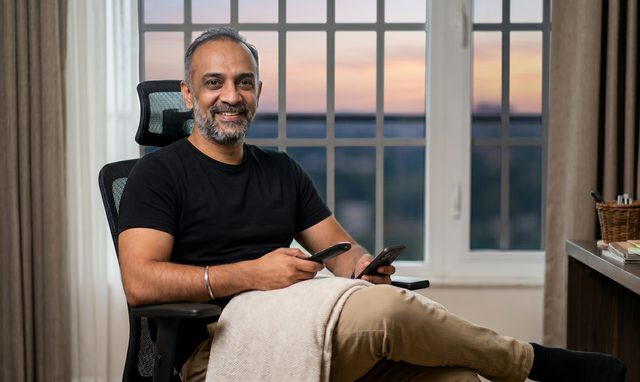
First I read your past to you. Then we talk about your future.
The call starts with your past. I read what the chart says has already happened, the hard years, when work moved, when marriage or a child came, and you tell me what fits, so within ten minutes you know whether I can read your chart. Only then do we come to your question and the timing. Message me any time with your birth details and your main question. I'm around all day until late, India time, and if I'm tied up I'll get back to you and we'll set a time that suits you. WhatsApp voice call in Hindi, English or Punjabi, in plain language and honestly, with no fear-mongering.
On reading Ketu
Ketu is not read the way the seven grahas are, and stating why makes this page usable rather than mystifying.
It has no physical body. Rahu and Ketu are the two points where the Moon’s path crosses the Sun’s, which is why they are always exactly opposite and why they move backward through the zodiac permanently. The tradition calls them chhaya grahas, shadow planets, and depicts them as the two halves of a severed asura, Rahu the head and Ketu the trunk.
Like Rahu, Ketu has no nature of its own and takes the character of the planet ruling the sign it occupies. What it does with that character is the opposite. Rahu enlarges what it finds, and Ketu concentrates it and then withdraws, which produces the pattern the tradition calls mastery without appetite. The classical dictum also holds that Ketu behaves like Mars.
On exaltation the texts disagree, with Scorpio, Sagittarius and Taurus each supported by a substantial tradition, so this site reads sign placement through the dispositor instead. On Kaal Sarp, that is a whole-chart condition, set out properly in the Kaal Sarp Dosha complete guide.
The star through Ketu
Aja Ekapada is an old and strange figure, a form associated with Rudra, connected to the pillar of fire that rises from the earth. What the tradition consistently attaches to him is tapas, the heat generated by austerity, the fire produced by a person rather than lit by one.
Standing on one foot is the classical posture of the tapasvi, and what it does is remove every support but one, deliberately, so that everything rests on a single point.
Jupiter rules the star and Saturn holds most of the sign, so philosophy and structure are being concentrated and released.
Now the arrangement, and it produces a genuine and easily misread condition. This placement is austere without trying. Comfort does not particularly appeal, possessions do not accumulate, ease is not sought, and none of that required a decision. What other people reach through years of practice is simply the resting state here.
The tradition’s own account of tapas is what complicates it. The heat is generated by holding a position against the pull of desire, and it is the friction that produces the power. Where the pull is absent the posture can still be held, but nothing rubs against anything.
The Ketu in Purva Bhadrapada nature
| Span | 20°00′ Aquarius to 3°20′ Pisces | Star lord | Jupiter |
| Dispositor | Saturn in padas 1 to 3, Jupiter in pada 4 | Deity | Aja Ekapada, the one-footed one |
| Symbol | The front legs of the funeral cot, the sword | Signature | Austere, unattached, unfrictioned |
Freedom from wanting is the first signature and it is real. This placement lives on very little without experiencing it as deprivation, which removes most of what drives other people and leaves the attention available for something else.
Endurance of difficult conditions is the second, from Saturn under this graha. Cold, discomfort, isolation and long unrewarded stretches register as circumstances rather than as hardships.
Seriousness is the third, from Jupiter’s lordship. The questions that occupy this placement are the large ones, and the interest in them is genuine rather than affected.
The strains follow the missing friction. The unearned austerity comes first and it is the central work, since a life that looks like sustained practice may be nothing more than a temperament. The tradition is exact about this. Tapas generates its heat by holding a position against desire, and where the desire was never present the position costs nothing and produces nothing. Giving up what you never wanted is not renunciation, and reading it as attainment is the single most flattering mistake available to this placement. Its correction is the tested renunciation, finding the one thing you actually do want, whatever it turns out to be, and practising there instead, since that is the only place friction exists for you.
The removed base is second, from the single foot, where the stripping continues past the last support and there is no felt signal that anything has gone, answered by one thing kept deliberately that you would not otherwise keep.
The unlived understanding is third, from Jupiter released, where the large questions are held and never applied to a day, answered by one conclusion acted on. And the sealed difficulty is fourth, answered by one person told plainly.
What it masters, what it empties
Ketu concentrates a thing and then withdraws from it, and both halves are the placement rather than one being a fault in the other.
What it masters here is living without. This placement manages on conditions that would end other people’s functioning, and does so without complaint and without the resentment that usually accompanies scarcity.
It masters the long serious question as well, holding one for years without needing it resolved.
What it empties is the friction. Nothing pulls against anything, so the austerity is free and the practice that would ordinarily be built on it has nothing to work with.
It empties the sense of a floor too, so the removing continues without the ordinary signal that something necessary has gone.
The corrective is the deity’s own posture read carefully. Aja Ekapada stands on one foot, which is not standing on none. The classical austerity removes supports down to a single deliberate point and then holds there, and the holding is the practice. A placement that removes the last one has not intensified the discipline, it has stepped out of it, since there is no posture left to hold. Natives running a Ketu mahadasha feel both halves at full strength, and timing belongs to the dashas rather than to the placement alone.
Male and female charts
Ketu in Purva Bhadrapada in a man’s chart
The pattern usually shows as a spare, serious man living on considerably less than he could, often in research, a contemplative discipline or a demanding field, and frequently regarded by others as unusually disciplined when no discipline is involved. He does not want much. His watches are the austerity read as attainment when it may only be temperament, and the supports removed one after another with nothing signalling that a floor has gone. His corrections are finding the one thing he actually wants and practising there, and one thing kept deliberately.
Ketu in Purva Bhadrapada in a female chart
The same spareness and seriousness appear, and the difference is that low expectations are more likely to have been arranged around her before she arrived at them herself, which makes the distinction between chosen austerity and assigned austerity worth drawing carefully rather than collapsing. Her endurance of poor conditions is real and rarely remarked on. Her watches are the same unearned renunciation, and the base that was never built because building one did not feel necessary. This page’s position is that keeping something is not a failure of detachment. Her corrections are the practice placed where friction actually exists, and one support maintained on purpose.
The four padas of Ketu in Purva Bhadrapada
The dispositor changes at the sign boundary, from Saturn to Jupiter, and each quarter is further read by the ruler of its navamsa, which is the secondary character being concentrated and released. The navamsa calculator renders the full chart.
Pada 1: 20°00′ to 23°20′ Aquarius, Aries navamsa
The driving quarter. Saturn is the dispositor and Mars rules the navamsa, which the graha already shares, so endurance and force run together, producing the hardest-working version of this placement. Strong for enterprise, the services and physically demanding fields. The watch is the pace maintained on almost nothing, since neither comfort nor rest registers as needed, and the correction is a stopping point fixed in advance.
Pada 2: 23°20′ to 26°40′ Aquarius, Taurus navamsa
The material quarter. Venus rules the navamsa, so taste and material sense attach to the austerity, which makes this the pada most likely to keep a base rather than strip it away. Strong for the crafts, property and the value trades, and this page’s second correction comes most easily here. The watch is the good thing appreciated and never acquired, and the correction is one thing deliberately kept.
Pada 3: 26°40′ to 30°00′ Aquarius, Gemini navamsa
The articulate quarter. Mercury rules the navamsa under a Saturn dispositor, so speech and analysis attach to the seriousness, which produces the version of this placement that can examine its own condition honestly and say what it finds. Strong for teaching, writing and technical work. The watch is the account given of a temperament as though it were an achievement, and the correction is the plain description. This pada closes at the sign boundary, so verify the degree if the birth time is approximate.
Pada 4: 0°00′ to 3°20′ Pisces, Cancer navamsa
The softened quarter. Jupiter becomes the dispositor and the Moon rules the navamsa, so compassion and feeling run together, which removes much of the hardness the rest of the star produces. Well suited to pastoral, medical and welfare work. The watch is the boundary that dissolves under sympathy, and the correction is the limit stated inside genuine willingness.
Career and work
Functioning on very little is the organising principle, so field research leads, in the sciences and in the remote and difficult postings where the conditions are the barrier and this placement does not experience them as one.
Contemplative and monastic vocations belong here genuinely, with the caution this page raises attached, since the fitness is real and the reason for it deserves examining.
Crisis and humanitarian work suits the combination directly, in the settings where comfort is unavailable and steadiness matters more than resources.
Technology and theoretical research suit the Aquarius quarters, and the fourth pada adds pastoral and welfare work. The filter is seriousness, this Ketu performs where the question or the situation is genuinely difficult and disengages entirely from comfortable work.
Money
The financial pattern is minimal by temperament rather than by circumstance, and the position is usually more precarious than the person registers.
The leaks follow the absent floor. The unbuilt base is the first and the largest, where no reserve, no property and no provision accumulate because none of it felt necessary, and the correction is treating a floor as infrastructure rather than as an attachment, since the tapasvi stands on one foot rather than on none.
Undercharging is second, since low needs make low rates feel adequate, answered by pricing against what the work is worth rather than against what you require. And the unclaimed entitlement is third, answered by an annual check of what you are owed.
Detachment
Ketu is the graha of release, so this series states plainly what each placement tends to withdraw from, on the principle that a named pattern is easier to work with than an unnamed one.
The detachment here is from comfort itself, and this is the placement where the series has to be most careful, because the pattern looks exactly like spiritual attainment and may be nothing of the kind.
The tradition’s own reasoning is the clearest guide. Tapas works because a position is held against the pull of desire, and the heat comes from that opposition. Remove the desire and the same posture can be maintained indefinitely at no cost, which is a pleasant condition and produces none of what austerity is undertaken for. Giving up what you never wanted is not renunciation. It is a description of your temperament.
That is worth saying plainly because the alternative reading is available everywhere and is very flattering. A person with this placement who lives simply, wants little and is untroubled by scarcity will be told they are advanced, and may believe it, and the belief will foreclose the actual practice.
The correction is to locate the friction. There will be something you want, and it may not be an obvious thing, since the ordinary appetites are absent here. It might be solitude, or being left alone with a question, or not being asked for anything. Whatever it is, that is the only place where holding a position costs you something, and therefore the only place where practice is available at all.
The second matter is the floor, and it needs its own note. Where the stripping has gone past a base into meals skipped without noticing, a home not maintained, or a body that is not being cared for, that is not austerity and belongs with a doctor or another professional rather than with a chart. The absence of a felt signal is exactly why it needs an external one.
Health
Ketu is associated with conditions that are sudden, obscure or resistant to diagnosis, and with amplifying whatever the rest of the chart already indicates rather than with an organ of its own. Purva Bhadrapada’s territory in the nakshatra purusha is the sides and ribs, and the signs add their own, Aquarius the circulation and ankles and Pisces the feet for the fourth quarter.
Basic maintenance is the practical headline rather than any organ, since a person who does not experience hunger, cold or tiredness as urgent will not respond to them, and the ordinary signals that keep everybody else fed and rested are muted here.
Where eating has become irregular, insufficient or simply unattended, that belongs with a doctor rather than with any plan found online, and this site gives no dietary guidance for exactly that reason.
Circulation belongs to the Aquarius quarters and is worth monitoring on a schedule. The honest note is that a life run this spare can carry a low mood that is attributed to nothing, and where it has settled rather than passed it belongs in a conversation with a doctor. On anything symptomatic, doctors lead and the chart follows, always.
Practices that suit this Ketu
Tuesday is Ketu’s day in common practice, and the standing observance is the salutation Om Ketave Namah, with Ganesha the customary devotional focus for this graha, so Om Gam Ganapataye Namah suits a household that keeps it. Thursday suits the Jupiter lordship of this star and Saturday the Saturn dispositor.
The star’s salutation is Om Aja Ekapade Namah, and the Rudra observances serve the same deity where a household prefers a familiar form.
The point about practice here is the page’s own and it inverts the usual advice. This placement does not need more austerity, and the reason differs from the reason given elsewhere. Austerity costs nothing here, so adding it produces nothing, and the practice that would actually do something runs in the other direction. Keeping a household properly, eating at reasonable hours, maintaining a base and turning up for people are all harder for this temperament than fasting is, and are therefore where the discipline actually lies.
The seva associated with Ketu is the giving of food and support without the giver being known, which suits this placement and is best kept on a fixed schedule.
Two disciplines carry the page’s teaching. The tested renunciation comes first and matters most, locating the one thing you genuinely want and practising there, since tapas generates its heat by friction against desire and giving up what you never wanted is a description of your temperament rather than an achievement. And the kept support comes second, one thing maintained deliberately that you would not otherwise keep, because the tapasvi stands on one foot rather than on none, and removing the last one is not a deeper discipline but the end of having a posture at all.
Questions people ask
Is Ketu in Purva Bhadrapada good?
The question fits this graha poorly. Saturn disposes the first three quarters and Jupiter the fourth, with Jupiter ruling the star, so Ketu concentrates endurance and then compassion and releases the appetite attached, in the mansion of self-generated heat. It gives genuine freedom from wanting, real endurance of difficult conditions and seriousness about large questions. Its strain is mistaking a temperament for an attainment. The whole chart, the dispositor’s condition and the running dashas decide the delivery.
Am I spiritually advanced or just uninterested?
That is the right question and the tradition answers it clearly. Tapas produces its effect through friction against desire, so a posture held with no desire pulling against it costs nothing and yields nothing. The test is whether the thing you are giving up is something you wanted. Where it is not, the practice needs relocating to wherever your actual wanting is.
Why does the reading change inside this star?
Because Ketu is read through its dispositor and this mansion crosses a sign boundary, so the first three quarters work on Saturn and the fourth on Jupiter, which softens it considerably.
Which pada of Ketu in Purva Bhadrapada is strongest?
The question works differently for Ketu, since each quarter changes which character is being released. Pada 1 combines Saturn with Mars and works hardest, pada 2 adds Venus and is likeliest to keep a base, pada 3 adds Mercury and can examine itself honestly, and pada 4 shifts to Jupiter with the Moon underneath and is the gentlest.
Does Ketu in Purva Bhadrapada mean Kaal Sarp?
No. Kaal Sarp concerns the arrangement of every planet in relation to the nodal axis and is a whole-chart condition, so no nakshatra placement establishes it. The Kaal Sarp Dosha complete guide sets out how it is actually assessed.
What careers suit Ketu in Purva Bhadrapada?
Field research and remote postings, contemplative and monastic vocations, crisis and humanitarian work, technology and theoretical research for the Aquarius quarters, and pastoral or welfare work for the fourth pada.
What remedies suit Ketu in Purva Bhadrapada?
Tuesday observance with Thursday and Saturday as natural seconds, the salutations Om Ketave Namah and Om Aja Ekapade Namah, or the Rudra observances where a household prefers them, and Ganesha worship. This placement does not need added austerity, since austerity costs it nothing, so the practice that works is the opposite one, keeping a household, eating at sensible hours and maintaining a base. The most useful discipline is unritual, practising where you actually want something. Gemstones follow the whole chart’s need and never a single placement, and cat’s eye in particular is never worn on a one-line rule.
Want this read in your own chart?
In this star the exact degree decides which planet Ketu is working on, and it always sits opposite Rahu, so the axis has to be read as a pair.
If you would like yours read properly, I offer a personal consultation over WhatsApp, your chart in plain language, what your placements actually promise, and the periods that support them.
Message on WhatsAppPersonal reading with Parminder Chahal · ₹2,100