Moon in Uttara Ashadha means you were born with the Moon between 26 degrees 40 minutes of Sagittarius and 10 degrees of Capricorn, in the latter of the two invincible stars, ruled by the Sun and presided over by the Vishvadevas, the Universal Gods, the whole assembly of divine principles holding one mansion together. The symbols are the elephant’s tusk, the single unbreakable point, and the planks of a bed, rest earned at last. Where Purva Ashadha declares the victory, this star completes it, and the completion is of a particular kind, the universal victory, the win endorsed by everyone including the defeated, the verdict nobody appeals, what is built here built to outlast its builder. If your janma nakshatra is Uttara Ashadha, this page is yours in full, the summit temperament, the back-loaded life curve told honestly, the two vargottama padas, and the solitary yoni no other star in the sky shares.
Uttara Ashadha spans two signs, which shapes the reading. Pada 1 stands in Jupiter’s fire in Sagittarius, padas 2 through 4 climb Saturn’s mountain in Capricorn, conviction first, then structure, the sovereign Sun working the long slope. Read this page alongside Moon in Sagittarius or Moon in Capricorn depending on your pada. The star’s own reference for any planet placed here lives at the Uttara Ashadha nakshatra guide.
On this page
Check your own chart · The story · The Uttara Ashadha Moon · Male and female charts · The four padas (1, 2, 3, 4) · Career · Money · Love · Marriage · Compatibility · Health · Your child · Name letters · Dasha at birth · Practices · Questions
Check your own chart
Confirm the placement before reading, especially here, where the first pada closes at a sign boundary. The checker returns your Moon’s exact nakshatra and pada from the Swiss Ephemeris, and flags a Moon sitting close enough to a boundary that birth-time error could move it.
Find this placement in your own chart
Birth details go to our own Swiss Ephemeris engine and nowhere else. Nothing is stored.
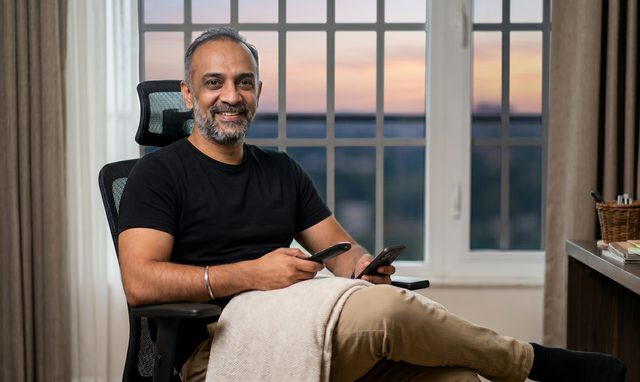
First I read your past to you. Then we talk about your future.
The call starts with your past. I read what the chart says has already happened, the hard years, when work moved, when marriage or a child came, and you tell me what fits, so within ten minutes you know whether I can read your chart. Only then do we come to your question and the timing. Message me any time with your birth details and your main question. I'm around all day until late, India time, and if I'm tied up I'll get back to you and we'll set a time that suits you. WhatsApp voice call in Hindi, English or Punjabi, in plain language and honestly, with no fear-mongering.
The story behind the star
The Vishvadevas are the tradition’s assembly, the Universal Gods, honored collectively in the oldest hymns and present to this day in every shraddha rite, where the ancestors’ offerings pass through their hands, the all-gods standing witness at the ceremonies that bind the generations. The texts name them as the sons of Dharma, and the names themselves are the teaching, the traditional lists, varying slightly across sources, reading like a syllabus of victory’s actual ingredients, truth, will, skill, time, desire, steadfastness, principles personified and seated together, and giving this assembly the star of final victory is the tradition’s precise answer to a precise question, what makes a win permanent. Not force, force’s victories last exactly as long as the force. Not cleverness, the clever win invites the cleverer reversal. The victory that lasts is the one all the principles endorse at once, won truthfully, built skillfully, timed rightly, held steadfastly, the win even the defeated concede was deserved, and that is the universal victory this star is named for, the verdict nobody appeals because everybody’s god signed it. The symbols carry the same weight, the elephant’s tusk, ivory, the hardest and most enduring thing a living body produces, the single point that does not break, and the planks of the bed, because the tradition knew what modern ambition forgets, that the summit’s final honest symbol is rest, the repose earned when the thing is actually finished. A Uttara Ashadha Moon inherits the whole assembly, the long climb, the incorruptible point, the victory built to outlive the victor, and the bed it too rarely permits itself, which this page will insist on.
The Uttara Ashadha Moon: the summit
| Span | 26°40′ Sagittarius to 10°00′ Capricorn | Lord | Sun |
| Deity | Vishvadevas, the Universal Gods | Symbol | Elephant tusk, planks of a bed |
| Gana | Manushya | Yoni | Nakula, mongoose |
| Nadi | Antya | Motivation | Moksha |
The Uttara Ashadha Moon finishes. Whatever the field, whatever the odds, whatever left the room years ago, this constitution is still on the slope, still climbing, and eventually, reliably, standing at the top of things other people announced and abandoned, because the placement’s whole architecture is built for the second half, the Sun’s authority worked through Saturn’s mountain, sovereignty earned by structure, the win assembled so slowly and so rightly that when it arrives nobody disputes it. That is this star’s signature and its distinction from every other ambitious placement in this series, Vishakha campaigns, Jyeshtha commands, Magha inherits, but Uttara Ashadha concludes, the final word that ends the argument, the verdict the room accepts, the gravitas that does not need volume, the person consulted last because their answer is the answer. Integrity here is not an ornament, it is the strategy itself, the long game of being trustworthy played for decades until trustworthiness becomes the asset nothing else can compete with, and duty runs correspondingly deep, the obligations honored past all convenience, the word kept at prices that make witnesses wince.
The strains are the altitude’s. The back-loaded curve first, told honestly because young natives need it told, this star starts slow, the twenties often unremarkable, the sprinters visibly passing, the early comparisons genuinely discouraging, and the sky’s own answer is the shape of the whole placement, the curve bends late and then does not bend back, the forties and fifties belonging to this Moon the way the twenties belonged to the hares, patience in the early years being not consolation but accurate forecasting. The unshared summit second, and here the yoni speaks, the mongoose stands alone in the entire scheme, the one animal no other star carries, no instinct-twin anywhere in the sky, and the loneliness of the peerless is this placement’s quiet tax, the standard nobody else quite holds, the altitude thinning the company. The postponed life third, joy deferred until after the climb, the family scheduled for after the summit, the rest promised to a retirement the workaholism keeps moving, Capricorn’s oldest trap. And the immovable position fourth, commitment so total that pivoting becomes constitutionally unavailable, the decade honored past its expiry, rigidity as invincibility’s tax. The disciplines answer in order. The early-years doctrine, for the young, the curve’s shape learned and trusted. The rope team, deliberate peers recruited since instinct will not supply them, the climber’s chosen cord, because the solitary yoni means all bonds here are architecture, and no star builds better. Joy scheduled on the climb, the celebration at every camp, not merely the peak. And the pivot clause, every long commitment given formal review windows, the mountain permitted, at fixed intervals, to be the wrong mountain.
| Strengths | Challenges |
|---|---|
| Finishes what everyone else announced | The slow start, sprinters passing early |
| The verdict nobody appeals | The peerless altitude, thin company |
| Integrity compounding into unmatched trust | Joy and family deferred past the summit |
| Builds what outlives the builder | The mountain unquestionable once chosen |
Male and female charts
The Uttara Ashadha Moon man
The man whose word is the contract, and everyone who has dealt with him twice knows it, the handshake that outperforms other men’s paperwork, the late-blooming patriarch, unremarkable at twenty-five and unshakeable at forty-five, the family’s eventual rock arriving exactly on the star’s schedule, the career a long escarpment rather than a ladder, each position held longer and left larger than he found it. His watches are the postponed household, present-after-the-summit being a summit that recedes precisely as fast as he climbs, the recitals missed for a mountain that will still be there and a childhood that will not, and the iron rut, the commitment unreviewable, the twenty-year course held five years past its truth. His fixes are the ones the profile issues at full dose, the family placed on the rope team formally, the climb shared rather than survived, camps celebrated together on the calendar, and the pivot clause signed with himself, the great commitments reviewed every third year in writing, because the tusk’s strength is its point, not its refusal to be re-aimed.
The Uttara Ashadha Moon woman
The steady summiteer, the woman who outlasts every flashier rival on sheer altitude tolerance, the institution woman, and usually, in time, the institution itself, the school that is really her, the department that would collapse without her, the family whose continuity is her decades-long unpaid engineering, authority accumulating so gradually that the room only notices it when she is briefly absent and nothing works. Her watches are the summit-flavored versions of the reliability trap, she becomes the institution and remains untitled in it, the credit summiting without her, and the deferred self, her own mountain postponed behind everyone else’s expeditions, the star of completion completing everything but her own named ambition. Her fixes are credit claimed at every camp, not just the peak, the contribution named in the room at each stage while it is fresh, and the ambition named early and aloud, one mountain designated hers in her own name, resourced by the household with the same seriousness her support has always resourced theirs, because the universal victory this star promises is not transferable, and she is owed her own.
The four padas of Uttara Ashadha
Uttara Ashadha carries two vargottama padas in a row, the first and second, straddling the sign boundary, the star’s essence doubly endorsed on both sides of the climb. The navamsa calculator renders the full D9 when you want the complete picture.
Uttara Ashadha pada 1: 26°40′ to 30°00′ Sagittarius, Sagittarius navamsa
The principled fire, vargottama. Sagittarius doubled concentrates the conviction, and this quarter is the star’s dharma-voice, the teacher-judge, victory pursued as principle before it is pursued as position, the most philosophical pada and the most persuasive by sheer sincerity, its authority moral before it is institutional. The watch is the sermon delivered from base camp, principle preached ahead of the climb that would prove it, and the correction is Capricorn borrowed from next door, the conviction given a construction schedule. This pada ends at the sign boundary, so verify the degree if your birth time is approximate.
Uttara Ashadha pada 2: 0°00′ to 3°20′ Capricorn, Capricorn navamsa
The pure summit, vargottama again. Capricorn doubled is the star’s essence at full concentration, the institution-builder supreme, structure raised on structure, the quarter that founds the school, codifies the practice, engineers the system that runs for fifty years, the steadiest pada in the whole series and the one on which the back-loaded curve pays out largest, its fifties towering. The watch is the granite decade, the structure become the self, and the correction is the bed plank honored, rest built into the blueprints as a load-bearing member, because this quarter above all forgets that the symbol set has two items.
Uttara Ashadha pada 3: 3°20′ to 6°40′ Capricorn, Aquarius navamsa
The collective victor. The Aquarius navamsa aims the summit at the many, and this quarter wins for the group, the Vishvadeva pada in the most literal sense, universal victory as public works, the reformer-builder, the systems designed so that everyone climbs, the cooperative founded, the standard set for the whole industry, the most networked pada and the least personally ambitious. The watch is the crowd served and the near ones queued, humanity funded while the household waits, and the correction is the concentric rule, the inner circle’s camp supplied first, then the world’s.
Uttara Ashadha pada 4: 6°40′ to 10°00′ Capricorn, Pisces navamsa
The sage summit. The Pisces navamsa dissolves the victory into meaning, and this quarter climbs for what the top reveals rather than what it confers, the mountain monk, authority ripening into wisdom, the retired justice everyone still consults, the elder whose verdicts became blessings, intuition the strongest of the four and ambition the most transparent. The maintenance is the water-navamsa standard, solitude on schedule and one confidant with full clearance, plus this pada’s own note, the summit shared downward, one climber taught the route each year, the sage’s altitude justified by the rope lowered from it.
Career for the Uttara Ashadha Moon
The professions are the summit’s own registry. Government and administration first, this being the civil services star in the fullest sense, the slow rise through permanent structures to permanent authority, the officer whose signature eventually steadies districts, and the judiciary above all, because the final verdict is this placement’s literal job description, the bench being where the universal victory reports for duty. Institution-building is the star’s signature entrepreneurship, the founder of the lasting kind, the school, the trust, the firm designed to outlive its founder, and the corporate summit belongs here on the star’s own schedule, the chief executive at fifty rather than thirty, arriving unhurried and staying long. Engineering and infrastructure inherit the tusk, what stands, the dam, the code base still running decades later, and the senior ranks of defense, academia and the priesthood all fit the pattern, authority earned through structure, with the ritual connection honest and specific, the Vishvadevas presiding over the shraddha rites making their star’s natives natural custodians of ceremony and continuity. In modern terms add standards bodies, governance and compliance leadership, the long-tenure premium careers where trust compounds. The filter for any offer is permanence, this Moon performs at its extraordinary best where the work will outlast the working, and hollows out in the disposable trades however brilliant the pay, because a summit that erodes was never this star’s mountain.
Money temperament
Uttara Ashadha money is the mountain that accretes. The pattern is the anti-drama, slow, permanent, compounding, the salary invested before it was felt, the land bought unfashionably early, the provident discipline native rather than learned, wealth assembled the way the career is assembled, in decades, and by the second half the quiet fortune stands where flashier portfolios rose and fell twice, real estate and the earthbound assets suiting the Capricorn ground especially. The watches are the summit’s own. Over-deferral first and most seriously, the fortune never enjoyed, the bed planks bought and never slept on, the native who dies rich having lived poor, every rupee a base camp for a summit of spending that never gets scheduled, answered by the enjoyment budget made mandatory, a fixed percentage of every year’s surplus spent on actual living, the trip taken, the table upgraded, the joy invoiced and paid like any other obligation. The single-asset mountain second, everything in one holding, the entire altitude on one ridge, answered by camps diversified, the wealth spread across faces of the mountain. And succession third, because this star builds estates that outlive it by design, and an estate without trained heirs is a summit without a route down, answered by the teaching begun early, the children walked through the holdings, the stewardship transferred in daylight. Provisioned so, no placement in the zodiac retires more securely, or has earned it more thoroughly.
Love life before marriage
Uttara Ashadha loves the way it does everything, slowly and then permanently. The courtship is glacial by every modern standard, interest expressed in reliability years before it is expressed in words, the beloved evaluated with the same unhurried thoroughness this star brings to any commitment it intends to keep for fifty years, and the vow, once made, is the tusk itself, unbreakable, the mongoose’s ferocity in defense of its own being the tradition’s own image, this gentle-seeming spouse turning absolute the moment the nest is threatened. The honest watches are the altitude’s. The postponed beloved first, romance scheduled after the establishment, the proposal queued behind the promotion behind the posting, the right person met at twenty-six and married, if the pattern is not caught, at thirty-six, answered by the rope-team reframe, love integrated into the climb rather than awarded after it, the partner recruited for the ascent itself. The undemonstrative summit second, love delivered entirely as provision and permanence while the words go unspoken for years, the spouse secure and unfed, answered by the weekly word, one sentence of felt affection spoken aloud on schedule until the muscle builds, because this star’s love is granite and granite still needs to say so. And the late-start grief third, the twenties watching peers pair off while this curve waits, met with the same doctrine as the career, the shape is back-loaded and the sky says so, the marriages this star makes in its own time outlasting nearly everything made faster. The one to look for is patient, self-possessed and warmed rather than frustrated by slow fires. The one to avoid is the sprinter demanding the summit by Friday, because this mountain does not hurry, and should never apologize for it.
Marriage and compatibility
The yoni is the mongoose, and this star carries a distinction unique in the entire scheme, no other nakshatra shares its animal, the one yoni without a partner star anywhere in the sky, and the honest reading of that solitude is this page’s most useful marriage teaching. For every other star, one pairing comes instinct-cheap, the yoni twin, the bond that works before anyone works at it. For Uttara Ashadha, no such shortcut exists, every bond here is architecture, built, not found, and the reframe is genuinely liberating rather than sad, because building is precisely what this star does better than any other placement in the zodiac, the marriage assembled with the same patient, principled, load-tested craft as everything else it raises, and the unions this Moon constructs, plank by deliberate plank, routinely outlast every instinct-cheap pairing on the block. The gana is manushya, matching widely, and the marriage’s needs follow the summit’s shape, patience with the slow fire, appreciation spoken for the provision that is this spouse’s native tongue, the enjoyment budget enforced conjugally, rest and celebration scheduled onto the shared calendar by the partner if necessary, and the pivot clause held jointly, the household’s great commitments reviewed together at intervals so that the mountain remains chosen rather than merely continued. The failure mode is the granite marriage, secure, silent, and slowly starved, prevented by the weekly word kept as law. The koota layers, including the Antya nadi check, belong inside the full ashtakoot matching system, weighed together rather than one rule at a time.
Uttara Ashadha compatibility with the other nakshatras
The layers for an Uttara Ashadha Moon sit as follows, yoni first, then gana, then the nadi gate, then temperament, remembering that with no yoni twin in the sky, this star’s strong pairings are built on kinship of principle rather than instinct.
Strong by constitution. Uttara Phalguni leads by the Sun kinship at its purest, the two solar Uttaras, the covenant and the summit, the kept vow beside the lasting victory, completion stars both, temperamentally the closest thing this solitary yoni has to a twin anywhere, clear nadi. Purva Ashadha stands next door as the other half of the shared name, the declaration handed to the finisher, the current that starts the conquest and the mountain that concludes it, exactly the handover that page records from its side, clear nadi. Pushya pairs the two institution stars, nourishment beside permanence, the most naturally domestic alliance available here, clear nadi. Bharani and Anuradha complete the built-strong list, the bearer’s depth and the devotee’s loyalty both sturdy enough for altitude, both clear.
Broadly workable. The manushya band matches on the human middle, the Phalgunis and Ashadhas fluent in this star’s seriousness. The steady devas suit well, Hasta’s craft, Shravana’s learning where the nadi were clear, Revati’s kindness. The sovereign charts meet the summit as peers under treaty, Magha, Jyeshtha and Vishakha all respecting a final word they cannot outrank.
Needs care. Rohini and Mrigashira carry the serpent yoni, the mongoose’s classical enemy animal, the oldest enmity in the scheme, the coiled and the striking, real charge and real friction beneath even genuine affection, workable only with the peace kept deliberately and permanently. The Antya nadi group holds the rest at the gate, Krittika, Rohini, Ashlesha, Magha, Swati, Vishakha, Shravana and Revati all share it, and the list carries this star’s own kin, Krittika, the third Sun star, blade beside summit, and Shravana, the immediate neighbor whose listening this climber genuinely needs, both stopped pending the full weighing with its cancellations. That weighing is the complete system’s job, single-factor matching is how it goes wrong.
Health and body for the Uttara Ashadha Moon
The classical purusha gives this star the waist, the body’s belt, where the load is girded, and the practical reading starts at the core, this constitution carries, literally and chronically, and the carrying musculature deserves deliberate strength, the lower back and core trained as the summit equipment they are, the decades of load honored with the exercises that let them continue. The Capricorn quarters add the sign’s own famous territory, the knees, and this is one of the zodiac’s honest knee placements, the climber’s joints, the desk-era’s stiffened hinges, the stairs of later decades, answered early with the unglamorous disciplines, the strength work around the joint, the weight kept honest, the flexibility maintained before it is missed, and Saturn’s ground extends the long game to bones and teeth generally, the mineral infrastructure serviced on schedule. The Sun’s lordship keeps the heart, the sovereign’s engine, worth the standing watch of any long-climbing life, the pressure checked, the cardio kept, and the placement’s systemic risk is the deferred rest, the workaholic depletion that presents as the collapsed season after the summit, answered by rest reframed as summit discipline, the camps scheduled, the bed planks used, recovery treated as part of the route rather than its opposite. And the lord supplies the simplest medicine in this series, morning sunlight, the Sun’s own Moon greeted by its ruler daily, mood, sleep and vitality all answering to it here with unusual directness. On anything symptomatic, doctors lead and the chart follows, always.
A child born in Uttara Ashadha nakshatra
For the parents here in the first week: an Uttara Ashadha birth needs no shanti and arrives with the tradition’s most trustworthy long game already installed, and the single most important thing this page can tell you is the shape of the curve, because this child’s is back-loaded, the sprints unimpressive, the marathons extraordinary, and the parent who understands that at the start becomes the child’s shield through every early season of watching quicker classmates collect the early prizes. Never run the comparison, not aloud, not silently at the school gate, the tortoise reading of this constitution is not consolation, it is the forecast, and your patience is the weather it grows best in. Expect the small officer early, the duties taken absurdly seriously, the monitor’s badge worn like a commission, the homework finished before the reminder, and honor the finisher above all, this child completes things, the puzzle, the course, the collection, and every completion celebrated builds the adult the whole page describes. Help build the rope team young, because the solitary yoni starts early, this child warms slowly, holds few friends and holds them for decades, and one friendship gently scaffolded, the classmate invited, the bond given time, teaches the built-bond craft that the adult will need on every summit. Watch the joyless ladder, achievement stacking without play, and schedule the silly deliberately, the nonsense hour protected, because Capricorn’s child postpones delight exactly the way Capricorn’s adult does, and the habit interrupts easiest at seven. And when the early discouragement comes, the race lost to the sprinter, the prize missed again, give the back-loaded talk honestly and often, your wins are the lasting kind and they are scheduled later, said with a straight face and meant, because a Uttara Ashadha child who trusts their own curve has been handed the entire teaching of their star, twenty years before the summit proves it.
Naming letters for Uttara Ashadha births
The traditional starting syllables are Bhe for pada 1, Bho for pada 2, Ja for pada 3 and Ji for pada 4. Names like Bhesaj, Bhoumik, Jagat and Jivan follow the convention in common modern forms. The custom keeps the janma nakshatra audible in daily life. It is an anchor, never a sentence.
The dasha you were born into
Janma nakshatra sets the opening of the Vimshottari sequence, so every Uttara Ashadha Moon begins life inside a Sun mahadasha, six years of the sovereign’s period, the shortest opening in the system, and the early biography carries the lord’s texture, the dignified child, the early sense of consequence, the father or the father-figure looming large in the first chapters for good or ill, identity’s foundations poured early and formally. The ten-year Moon period that follows softens the opening through the school years, and Mars and Rahu carry most natives through the long establishing decades where the back-loaded curve does its quiet accumulating. The sequence then runs Moon, Mars, Rahu, Jupiter, Saturn, Mercury, Ketu, Venus, and the arrangement is this star’s biography written in advance, Jupiter’s sixteen years typically opening the ascent proper, Saturn’s nineteen delivering the summit decades in the exact register this placement climbs in, structure, endurance, earned authority, the mountain’s own lord presiding over the mountain’s own years. Which periods deliver what this chart promises depends on house lordships and placements, dasha is king in all timing questions, and that layer is individual work, not a page.
Practices that suit this Moon
Uttara Ashadha’s worship belongs to the assembly, and the tradition has kept the Vishvadevas a standing appointment in every household that keeps the rites, the shraddha ceremonies, where the Universal Gods receive the offerings that pass to the ancestors, making the ancestral observances this star’s own practice in the most literal sense, the tarpana kept, the Pitru Paksha honored, continuity served at the altar exactly as this placement serves it everywhere else. The salutation in family use is Om Vishvadevebhyo Namah, homage to all the gods together, and Sunday observance suits the Sun’s lordship, with the lord’s simplest rite, the morning light taken directly, standing as daily worship and daily medicine in one. The behavioral sadhanas gather the page’s teaching into ceremony. The decade vow, one long commitment written formally, with its camp-reviews scheduled into the text itself, the pivot clause built into the oath. Joy on the climb, the monthly celebration held mid-project as an obligation, the bed planks used before the summit. The rope-team practice, one peer deliberately recruited at the start of every major climb, the solitary yoni answered by chosen cordage. And the completion rite, this star’s own and finest, everything finished honored formally, the project closed with thanks, the era ended with ceremony, the small altar of finished things maintained, because the universal victory was never only about winning, it was about concluding rightly, and the one who concludes rightly, the Vishvadevas’ whole assembly agrees, has already won.
Questions people ask
Is Moon in Uttara Ashadha good?
It is one of the zodiac’s most trustworthy and ultimately triumphant placements, the universal victory, integrity as strategy, wins that outlast the winner. Its challenges, the slow start, the postponed joy, the peerless solitude, are workable once named, and the first two are mostly schedule. The whole chart and the dashas decide the final delivery, as always.
What is the difference between Purva Ashadha and Uttara Ashadha?
One victory divided between two stars, Purva Ashadha the declaration, the persuasive current that starts the conquest, Uttara Ashadha the completion, the universal, lasting victory that finishes it, Venus’s charge handed to the Sun’s summit. The pairing between them is one of the zodiac’s natural handovers, and each star’s page in this series records it from its own side.
Is Uttara Ashadha a late-success star?
Honestly, yes, and gloriously so. The curve is back-loaded, the twenties often quiet, the forties and fifties commanding, the pattern consistent enough that this page teaches young natives to trust it as forecast rather than consolation. What arrives late here arrives permanent.
Why does no other star share Uttara Ashadha’s yoni?
The mongoose stands alone in the scheme, the one yoni without a partner star, and the working reading is the built-bond doctrine, no pairing comes instinct-cheap to this placement, every bond is architecture, which suits the zodiac’s finest builder better than it sounds. The marriages this star constructs deliberately routinely outlast the instinct-matched kind.
Which pada of Uttara Ashadha is best?
Padas 1 and 2 are both vargottama, the principled fire and the pure summit at doubled strength, pada 3 wins for the many, pada 4 ripens into the sage. The right question is which one you have and what it asks of you.
Who should an Uttara Ashadha Moon marry?
Uttara Phalguni in the solar kinship, Purva Ashadha as the other invincible, Pushya as the fellow institution, Bharani and Anuradha for sturdy depth, with the serpent-yoni stars, Rohini and Mrigashira, needing the peace kept deliberately and the Antya nadi group, Krittika and Shravana included, needing the layer weighed with its cancellations. The full answer is always the complete ashtakoot weighing of two specific charts.
What dasha does an Uttara Ashadha born start with?
Sun mahadasha, six years or the balance of it, followed by the Moon’s ten. The checker on this page confirms your janma details.
What are the lucky letters for Uttara Ashadha nakshatra?
Bhe, Bho, Ja and Ji by pada. Use the convention as an anchor if it serves your family, and hold it lightly.
Which gemstone should an Uttara Ashadha Moon wear?
Stones follow planets, not birth stars. The nakshatra lord Sun’s ruby enters consideration only if the Sun’s role in the whole chart supports it, decided by proper analysis. This site’s standing position is risk-based, no stone on a one-line rule.
Want this read in your own chart?
Reading a nakshatra placement properly means weighing the planet, its nakshatra lord, the pada’s navamsa, the house it all lands in, and the dasha that decides when any of it delivers. It takes time and a trained eye.
If you would rather have it read for you, I offer a personal consultation over WhatsApp. We go through your chart in plain language, what your placements actually promise, and the periods that support them.
Message on WhatsAppPersonal reading with Parminder Chahal · ₹2,100